
Selling a Co-op on the Upper East Side: Pricing, Preparation and Board Review
Learn how to price and prepare an Upper East Side co-op, compare offers, and plan for board review, transfer fees, and closing.


Selling an Upper East Side co-op is not the same as selling a house or a condo. You are selling shares in a corporation plus the right to occupy a specific apartment under a long-term lease. The building can review the buyer, the documents can change the pool of buyers, and a fee you have not seen yet can reduce your proceeds.
This guide follows the sale from the first document review to closing. It explains how to price one line and floor rather than a neighborhood average, how to prepare the apartment and its records, how to compare offers, and how to manage contract, board review, transfer charges, and timing. Building rules are not standardized. Confirm your building's current rules from its own documents and managing agent.
Prepare the apartment and the paperwork together. Price from closed sales in the same line and building, then adjust for floor, light, layout, condition, maintenance, and building rules. Choose an offer by price and board readiness, not price alone. Confirm flip tax, transfer fees, and taxes before you set an expectation for your net proceeds.
Start here
A co-op sale has two products to manage
The first product is the apartment: its rooms, light, condition, storage, outdoor space, and monthly cost. The second product is the transaction: the share transfer, building forms, buyer qualifications, board review, and closing documents. A beautiful apartment can still face a slow or failed sale if the second product is not ready. In this guide, a line means the vertical stack of rooms and windows that repeats on the floors above and below your apartment.
John G. Slattery is a Corcoran agent with six years in real estate and 37 sales. He helps Upper East Side sellers price their homes, prepare for market, and compare offers with the building’s requirements in mind.
The practical lesson is simple. Ask for the listing plan, not just a price recommendation. The plan should show which building documents will be collected, which apartment facts will be verified, how the price range will be built, what the marketing will show, how offers will be compared, and how contract and board review will be tracked.
Ownership and rules
What you are actually selling
In a cooperative, the corporation owns or holds the building interest. Your shares are allocated to your apartment, and your proprietary lease gives you the right to occupy it. The buyer receives those shares and lease rights, not a deed to real property. The New York Attorney General describes this structure on its cooperative ownership page.
That structure explains the main sale differences: board consent, share-loan financing, monthly maintenance, building transfer charges, and occupancy rules. A share loan is a loan secured by the co-op shares. It also explains why two apartments with similar rooms can be treated very differently by the market.
| What to confirm | Why it matters to the sale | Best source |
|---|---|---|
| Ownership documents | The stock certificate and proprietary lease identify the shares and occupancy rights being transferred. | Your certificate, lease, and closing attorney |
| Line, floor, layout, and light | These facts separate your apartment from a sale in another line or on another floor. | Accurate floor plan, measurements, and in-person review |
| Condition and alterations | Buyers price visible condition, systems, and the risk created by undocumented work. | Alteration approvals, permits, sign-offs, warranties, and contractor records |
| Monthly maintenance | The buyer combines the purchase price with the monthly bill, which affects what the buyer can pay. | Current managing-agent statement and budget |
| Use and occupancy rules | Primary-residence, sublet, guarantor, trust, second-home, and financing rules can narrow the buyer pool. A guarantor is someone who signs to support the buyer's obligations; a pied-a-terre is a second home used only sometimes. | Current bylaws, house rules, proprietary lease, and managing agent |
| Shared rights and charges | Parking, storage, outdoor space, assessments, and transfer fees can change value and net proceeds. | Current building documents and written managing-agent confirmation |
Read the documents in the right order
The offering plan and its amendments are a starting point. The New York Attorney General's co-op and condo guide explains that sales are made under offering-plan terms, but also notes that a resale plan may not contain current condition information. That is why you also need the proprietary lease, bylaws, house rules, current board requirements, and written instructions from the managing agent.
Ask the managing agent
Current transfer package
- Is there a flip tax or transfer fee, who pays it, and how is it calculated?
- What seller and buyer forms are required?
- What are the current application, interview, and response practices?
- Are there move-out, elevator, damage-deposit, or restoration charges?
- Is any assessment or capital project active or being discussed?
Ask your attorney
Transfer and use issues
- Do the documents contain a right of first refusal or another purchase right?
- What happens if the buyer fails to receive board consent?
- Which known-condition, alteration, lease, and occupancy disclosures belong in the contract?
- How are taxes, transfer fees, and the share-loan payoff shown on the closing statement?
Do not copy another building's flip tax, financing cap, sublet rule, or interview practice. Confirm the current wording for your apartment in writing. The rules can differ across the Upper East Side, and they can change.
Buyer diligence
The questions buyers will ask before they make an offer
A serious buyer is buying the apartment and the corporation's rules at the same time. Buyers and their attorneys ask practical questions early. If the answers are slow or unclear, the buyer may reduce the offer, add conditions, or walk away.
Can I finance it?
Buyers ask how much down payment the building permits, whether the lender accepts the building, and how much cash the board expects to remain after closing. A financing limit can remove otherwise qualified buyers before showings begin.
What does maintenance cover?
Buyers compare the full monthly cost. They want to know what is included, whether the bill recently changed, and whether a temporary assessment is active.
Can I use the apartment as I plan?
The buyer may ask about primary residence, subletting, a second home used only sometimes (a pied-a-terre), a trust, a guarantor, pets, or a family member's occupancy. Answer from the current rules, not from memory.
Is the work documented?
Buyers ask whether a kitchen, bath, electrical, plumbing, or wall change was approved and signed off. Missing records create negotiation leverage even when the work looks good.
What is the building planning?
Buyers ask about lawsuits, facade or elevator work, plumbing projects, reserve strength, the building-wide loan (often called the underlying mortgage), and any planned special charge. Provide current documents rather than rumors.
How does approval work here?
Buyers ask for the application, required financial records, interview practice, fees, and timing. The buyer needs a clear process, but the seller should never promise an approval.
Prepare answers before the first offer. A complete building file and a truthful description of the apartment reduce late-stage surprises. When a fact can change, date it and say who confirmed it.
Pricing
Price from the right completed sales
Start narrow. The best evidence is usually a recent closed sale in your line, followed by a closed sale in the same building. Move outward only when the evidence requires it. A whole brownstone or whole house comparison is not needed here; the problem is that two co-ops can look alike while carrying different maintenance, rules, and transfer costs.
| Comparison level | How to use it |
|---|---|
| Same building and line | The closest evidence. Look first for a recent closed sale in the same line, then adjust for floor and condition. |
| Same building, different line | Useful when the layout, light, or floor differs. Record the difference instead of treating the sale as a match. |
| Similar co-op nearby | Use after building-level evidence. Match property type, size, age, condition, maintenance, and transfer rules. |
| Wider Upper East Side data | Use for context only. A neighborhood median mixes buildings, property types, and price ranges. |
| Difference | What to compare |
|---|---|
| Floor and light | A higher floor, wider view, quieter exposure, or stronger natural light can change value. Compare what the windows actually face. |
| Line and layout | A corner line, larger rooms, better flow, more bathrooms, or a different bedroom placement is not the same as another line. |
| Size | Confirm the measurement source. Square footage can differ between the listing, floor plan, tax record, and offering plan. |
| Condition | Separate cosmetic updates from systems work. A new kitchen does not automatically earn a set percentage increase. |
| Monthly maintenance | Buyers combine the purchase price with the monthly bill. Compare what is included and whether any assessment is active. |
| Parking, storage, and outdoor space | Confirm that the right transfers with the shares and that the building permits the intended use. |
| Building rules | Financing limits, occupancy rules, and transfer charges can narrow the buyer pool and affect price. |
Closed prices are more useful than asking prices because an asking price records a seller's hope, not a completed transaction. If you use an asking price for context, label it. Do not describe a sale as above the market, below the market, or a record without a supported comparison.
The New York City Department of Finance comparable-property page says there is never a perfect match and that differences require adjustments. Its method is for tax assessment of a whole co-op building using rental-building income and expenses. It is useful support for the idea of adjustment, not a formula for pricing one apartment.
Before the listing price is chosen, compare the apartment with the active competition too. A closed sale tells you what the market paid. The current listings tell you what a buyer will compare during the first weeks on the market. Both matter, but they answer different questions.
Preparation
Prepare the apartment and its records
Preparation should remove doubt. Buyers should be able to see how the rooms connect, understand the condition, find the answers to building questions, and reach the documents without waiting. The work does not need to be expensive to be useful. It does need to be honest and complete.
- Handle safety and active problems first. Leaks, electrical issues, broken appliances, loose hardware, and signs of water damage deserve attention before photography. Staging over a defect does not fix the defect.
- Confirm alteration records. Gather approvals, permits, sign-offs, contractor invoices, and warranties. If records are missing, ask your attorney and the managing agent what can be obtained before a buyer asks.
- Make selective repairs. Deep clean, touch up paint, repair doors and cabinets, polish floors when useful, and replace failed fixtures. Decide on a larger project only when the price evidence and building process support it.
- Edit the space. Remove excess personal items, open window treatments, clear counters, and organize storage. Closets will be opened during showings, so leave them usable rather than stuffed.
- Choose presentation carefully. Stage the apartment when furniture helps explain scale or flow. Use virtual staging only when it clearly improves the image and label it as virtual. Do not create a view, feature, or room that does not exist.
- Confirm building logistics. Ask about vendor insurance, elevator reservations, work hours, hall protection, photography rules, open-house limits, and move-out requirements.
Disclosure is specific to a co-op
New York's Property Condition Disclosure Act applies to certain residential property, but the statutory definition expressly excludes cooperative apartments. You can read the requirement in Real Property Law § 462. Do not assume that the standard form is automatically required for a co-op sale, and do not assume that the usual $500 credit rule is the co-op answer.
That does not mean disclosure disappears. Your contract and building process may require known-condition answers, alteration history, lease or occupancy information, lead-paint material, and other riders or forms. Your attorney should confirm what applies to your transaction. Tell the truth about known problems; silence creates more risk than a clear answer.
The standard New York property-condition form excludes cooperative apartments. Contract, building, lease, alteration, and known-condition disclosures still need to be handled for the actual sale. Confirm the requirements with your attorney.
Working checklist
Listing-readiness checklist
0 of 10 ready
Your checklist stays on this page while you review it. The progress count does not calculate a valuation or closing date.
Marketing
Show the real apartment, line, and building
The listing should answer three questions quickly: What is it like to live in this apartment? What makes this line or floor different? What rules and monthly costs come with it? Good visuals carry the first answer. Accurate facts carry the other two.
Photography and floor plans
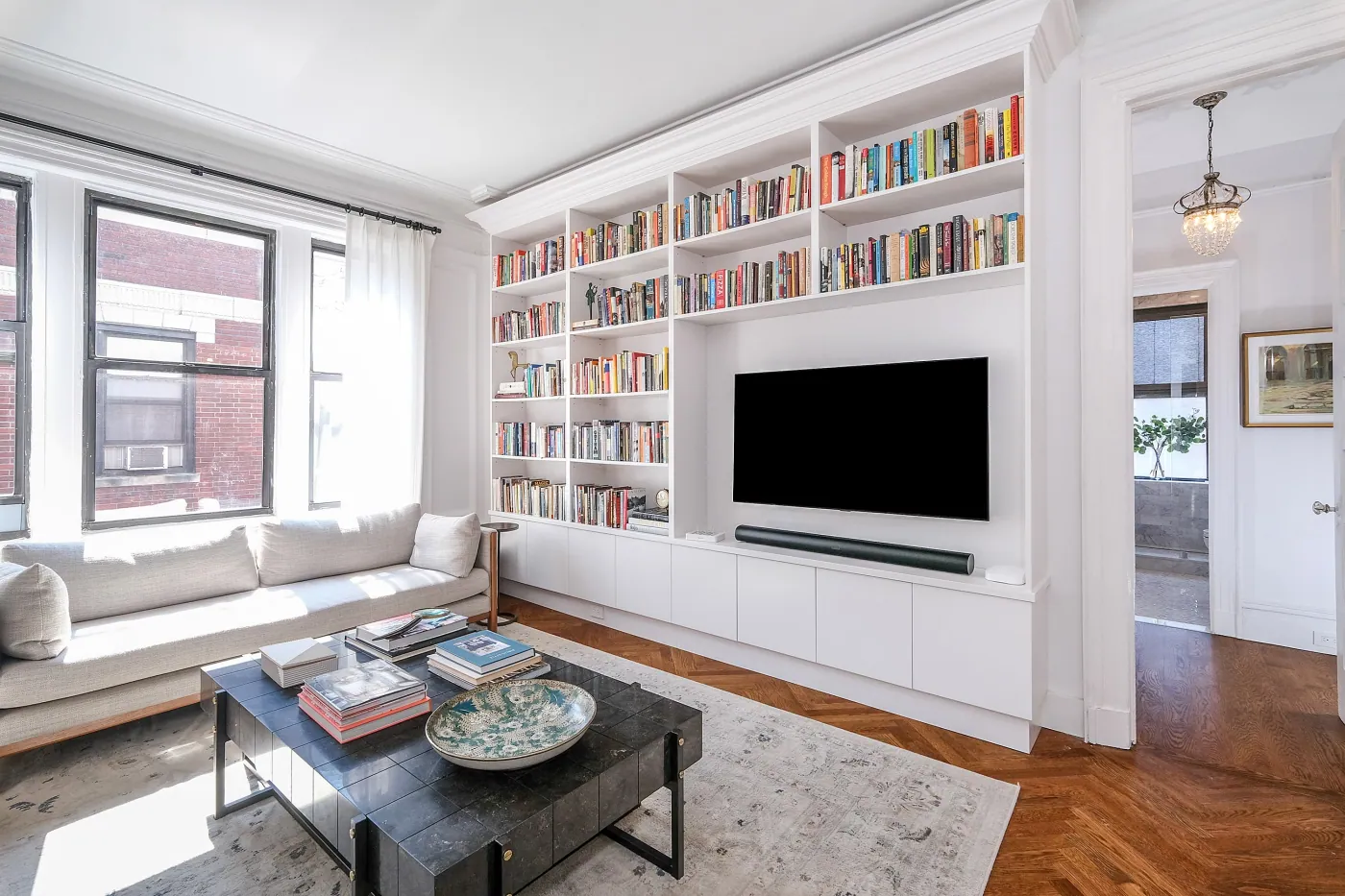
Use professional photography when possible. The strongest images show natural light, ceiling height, window placement, room flow, built-ins, kitchen and bath condition, and any real outdoor space. Shoot the apartment as it is. A wide shot of the living area is more useful than a close-up of a decorative object.
An accurate floor plan helps a buyer understand scale before a showing. Label rooms and include dimensions only when the source supports them. If a wall, office, nursery, or dining area is flexible, show that flexibility in the copy and furniture plan rather than inventing a room.

Put material facts in the listing
State the verified apartment facts and the material building rules buyers need before they spend time: share count if useful, maintenance, financing limits, occupancy or sublet policy, active assessment, parking or storage, transfer charges, and alteration status. Do not bury a high monthly bill or a narrow use rule in the last paragraph.
Market the apartment to buyers and brokers through listing platforms, broker outreach, targeted email and showings. Follow up after each showing so you know what buyers are responding to.
Showings and open houses
Confirm the building's rules before every showing. Some co-ops limit open hours, require appointments, require a resident or agent to be present, or ask for advance notice. Follow the written rule even when it is inconvenient.
- For an occupied home, create a reset routine: clear surfaces, open blinds, control odor, secure pets, and make access simple.
- For a tenant-occupied apartment, review the lease and notice rules first. Arrange access in writing and protect the tenant's rights.
- For a vacant home, keep utilities on, clean before every appointment, and make the empty rooms feel intentional rather than abandoned.
- For a renovation or estate-condition apartment, explain what is original, what is approved, what is incomplete, and what the buyer would need to do.
Collect showing feedback in writing. If buyers like the layout but question the monthly cost, that is different from buyers who do not understand the floor plan. Use the pattern to improve the presentation or reconsider the price, not to invent a market-wide conclusion from two showings.
Offer to closing
Offers, contract, board package, and closing
An offer is a proposed deal, not a completed sale. In New York practice, the accepted offer is usually followed by a deal sheet, a short written summary of the agreed terms sent to the attorneys, then attorney review, contract preparation, negotiation, signature, and deposit. The exact order and timing depend on the contract and the parties. Treat this as common process, not a fixed law.
Corcoran's New York City seller guide also treats preparation, pricing, marketing, showing, negotiation, and closing as a connected process. Use it as a general process reference; your building documents still control co-op-specific steps.
| Offer term | What to verify |
|---|---|
| Price | Compare the offer with the supported price range, not only with other offers. |
| Deposit | A larger deposit can show commitment, but the contract still controls when it is at risk. |
| Financing | Confirm the loan size is allowed by the building and that the lender can close on a co-op share loan. |
| Financial file | Ask whether the buyer can supply the tax returns, bank statements, employment letter, references, and other documents the building requests. |
| Occupancy plan | The buyer's intended use must fit the building's current rules. Ask for a clear, truthful plan. |
| Dates and contingencies | Read the board-review, financing, and closing dates together. A fast date means little if the buyer's file is incomplete. |
Contract and seller disclosures
The seller's attorney usually prepares the contract. Review the board-consent language, financing language, deposit terms, closing date, building forms, transfer-charge allocation, and any lease, alteration, or occupancy riders. A board-consent contingency lets a buyer end the deal if the board does not approve, under the wording in that contract. If the apartment is tenant-occupied, the lease and notice requirements need their own review.
A New York real estate attorney is customary and strongly advisable for this customized contract. Do not treat an online form or a broker summary as legal advice. The attorney should tell you what disclosures and forms your actual transaction requires.
The buyer's board package
After contract, the buyer assembles the building's application. Depending on the building, the package may include tax returns, bank and brokerage statements, pay stubs or an employer letter, a personal financial statement, references, identification, the signed contract, lender documents, and the building's own forms. The building controls the list.
Your listing side should ask for a complete, organized file and review the buyer's qualifications against the building's known standards. That does not mean you can choose the outcome. It means you can avoid presenting an obviously incomplete deal as ready for review.
The board may grant consent, grant consent with conditions, deny the sale, or request more information. No agent, attorney, lender, or seller can promise approval. Fair housing law still applies, and the building must follow its own governing documents and current law.
What a right of first refusal means
A right of first refusal is a purchase right. If the holder exercises it, the holder steps into the proposed transaction on the applicable terms. It is not the same as a co-op board's ordinary decision whether to consent to a transfer of shares. A co-op can also have other transfer restrictions in its documents.
Do not assume every Upper East Side co-op has this right. Ask your attorney to find the exact provision, notice period, exercise method, and waiver requirement in your building's documents. If a right exists, it must be handled in the contract and application process.
For a general legal comparison of consent and purchase rights, see this New York co-op board-approval explainer. It does not replace the documents for your building.
The current board-review clock
New York City enacted Local Law 58 of 2026 on January 29, 2026. It took effect 180 days later, on July 28, 2026, and applies to covered applications made on or after that date. The official NYC Council legislation page sets these main rules:
The cooperative must acknowledge the application and say whether it is complete, what is missing, and what clarification is needed.
If the cooperative does not give the required acknowledgment, the application is considered complete on the date the acknowledgment was due.
After acknowledging a complete application, or after the deemed-complete date, the cooperative must notify the purchaser whether consent is granted, granted with stated conditions, or denied.
The purchaser may agree in writing to extend the deadline. The cooperative may extend once by no more than 14 days without the purchaser's consent if it gives notice before the current deadline.
If the cooperative has adopted a summer-recess notice, the notice can pause (or toll) time during the stated summer period.
The law excludes certain Housing Development Fund Corporations (HDFCs), entities whose sales require a government housing agency's approval, and entities owning or leasing residential property with fewer than 10 dwellings. Ask counsel whether the law covers your building.
This law improves transparency for many covered transactions. It does not guarantee a buyer, an approval, a particular interview date, or a closing date. It also does not remove the buyer's need to assemble a complete package.
Closing
After approval and lender clearance, the attorneys and managing agent coordinate the closing. The seller transfers the shares and proprietary lease, pays or resolves the share loan and stated charges, and receives the proceeds shown on the closing statement. The buyer receives the shares and lease rights. There is no deed transfer in the ordinary co-op closing.
Fees and taxes
Confirm flip tax, transfer fees, and taxes before pricing
A private building charge and a government tax are different things. A flip tax or transfer fee is set by the cooperative. A transfer tax is imposed by government law. Both can affect the deal, but they come from different sources and need different confirmation.
Private building charge
Flip tax or transfer fee
The building may charge a fee when shares transfer. It may be calculated as a percentage of the sale price, a percentage of profit, a flat amount per share, or another stated method. Some buildings do not charge one. The formula, payer, minimum, cap, and timing must come from the current proprietary lease, house rules, and managing agent.
Government tax
Real property transfer tax
New York City's Department of Finance says RPTT applies to transfers of cooperative housing stock shares. For an individual residential cooperative apartment, the listed rate is 1% when consideration is $500,000 or less and 1.425% when it is more than $500,000.
New York State also imposes a real estate transfer tax on qualifying conveyances. The state's official transfer-tax page explains the base tax, who generally pays it, filing timing, and additional taxes for higher-price residential conveyances. A nonresident seller may also have estimated income-tax filing duties; the state page identifies the cooperative-unit form. Rates, exemptions, and allocation should be checked with the current closing statement, attorney, and accountant.
| Cost category | What to confirm | Where to confirm it |
|---|---|---|
| Share-loan payoff | Latest lender statement and daily interest through closing | Seller's attorney and lender |
| Building flip tax or transfer fee | Current formula, payer, minimum, and any cap | Proprietary lease, house rules, managing agent |
| NYC Real Property Transfer Tax | Current rate and transaction classification | NYC Department of Finance and closing attorney |
| New York State transfer tax | Current base tax and any higher-price additions | New York State Department of Taxation and Finance and accountant |
| Nonresident estimated tax | Whether the seller qualifies for an exemption or must file | Accountant and official state forms |
| Brokerage fee | Signed listing agreement | Listing agreement |
| Attorney and managing-agent charges | Current invoices, transfer forms, and move-out requirements | Attorneys and managing agent |
| Maintenance, repairs, and move-out | Unpaid charges, damage, elevator reservation, and required restoration | Managing agent and closing statement |
Ask for a written net-proceeds estimate that includes the building's current transfer charge, government taxes, mortgage payoff, professional fees, and known move-out or repair costs. A net estimate can change; it should still be based on the actual documents, not a generic percentage.
Practical answers
FAQs and the next step
How far ahead should I start preparing?
Start with the documents and a condition review as soon as you are considering a sale. Most cleaning, editing, repairs, photography, and floor-plan work can be scheduled later. If the apartment needs permitted work, board approval for an alteration, or a major repair, begin those steps earlier because the building's schedule may be the slow part.
Which documents should I gather first?
Start with the stock certificate, proprietary lease, current building transfer requirements, recent alteration approvals, share-loan statement, and occupancy or lease records. Then ask the managing agent for the current flip-tax or transfer-fee wording, application package, move-out rules, and notice of any assessment or capital project.
Should I renovate before listing?
Do not renovate just because the kitchen is old. Use the closed-sale comparison to decide. Targeted work often matters most when it repairs a visible problem, confirms that the apartment is well maintained, or makes the layout easier to understand. A larger project needs a clear reason, a realistic budget, and enough time for building and city approvals.
How is the price assessed?
Start with closed sales in the same line and building. Adjust for floor, light, layout, size, condition, maintenance, parking, outdoor space, and building rules. Then use similar nearby co-ops and wider neighborhood data as context. Asking prices and neighborhood medians are not substitutes for closed, like-for-like evidence.
What may selling costs include?
Your costs may include the payoff on your share loan, any building flip tax or transfer fee, government transfer taxes, attorney and managing-agent charges, brokerage fee, unpaid maintenance, and move-out costs. The exact list and allocation depend on your building and contract. Ask your attorney and accountant for a current net sheet.
How does specialist experience help?
John can help you gather building documents, price the apartment against useful comparisons, prepare for market and compare offers before board review.
Will the board approve my buyer?
No one can promise approval. The board reviews the buyer under the building's current standards and may approve, approve with conditions, deny, or ask for more information. Your job is to choose a well-documented offer and keep the process honest and complete. Fair housing law still applies.
How long will the sale take?
There is no reliable fixed date. Preparation, pricing, showings, contract negotiation, the buyer's board package, financing, board scheduling, and closing all take time. New York City's current law sets response deadlines for many covered co-ops, but the law has exclusions, extensions, and summer-recess rules. It is a review clock, not a guaranteed closing date.
Listing consultation
Bring the actual apartment and the actual documents.
The useful first conversation is specific: your line and floor, maintenance, alteration history, occupancy or tenant status, current building instructions, timing, and what you need to net. John G. Slattery can review the sale assignment with you and explain the next step for this property.
Request a listing consultationOfficial sources used in this guide include the New York Attorney General's cooperative guidance, NYC Department of Finance transfer-tax and comparable-property pages, New York State transfer-tax guidance, Real Property Law § 462, NYC Council Local Law 58 of 2026, and a New York real-estate law explanation of board approval. Building-specific rules, tax treatment for your transaction, and contract language must be confirmed for the actual sale.